
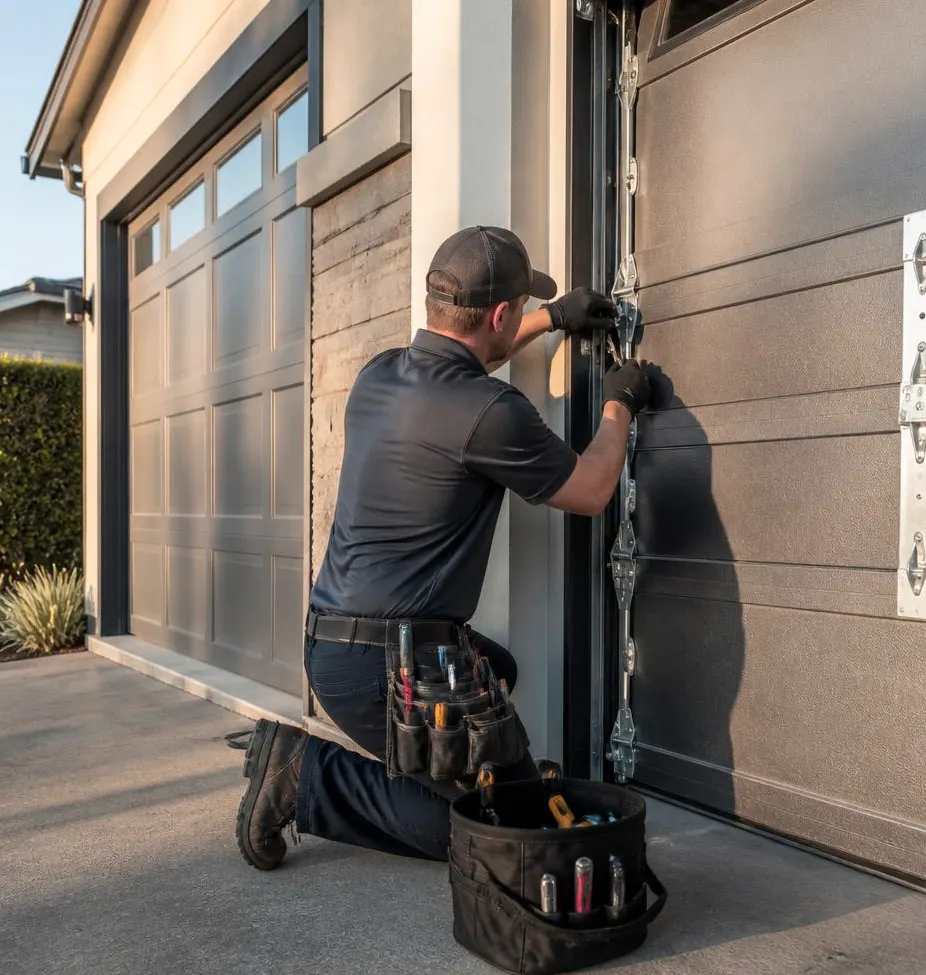
What a Technician Usually Finds on These Calls
A typical service call starts the same way: one spouse thinks the door is "basically new" and the other is convinced it's on its last legs. The technician checks the date stamped on the inside of the panel, looks at the springs, tests the opener's force settings, and usually lands somewhere in the middle. The door itself might have another decade in it. The opener motor, on the other hand, is often the real problem, especially in homes with the original equipment still running from whenever the house was built.
In this part of New Jersey, that "original door" scenario is common. A lot of the housing stock here is older, and plenty of garage doors and openers have simply never been replaced, only patched. That matters, because age alone doesn't tell the whole story. How a door has been used, maintained, and exposed to weather matters just as much as how many birthdays it's had.
The Honest Lifespan Numbers
Here's what holds up across most manufacturers and most climates, not just this one:
- Garage doors (the panels themselves): 15 to 30 years, depending on material and how well they were installed and maintained.
- Garage door openers: 10 to 15 years for the motor and drive system before parts start failing or replacement parts get hard to find.
- Torsion and extension springs: rated in cycles, not years, usually 7 to 12 years for an average household that opens and closes the door a few times a day.
- Cables, rollers, and hinges: 7 to 10 years, often replaced piecemeal as they wear rather than all at once.
So if someone says "this door is only 12 years old, it's fine," they're often right about the door panel and wrong about the springs and opener, which have likely already outlived their expected cycle count.
What Shortens That Timeline Around Here
Climate is doing more damage than most homeowners realize, and it's not just about cold weather.
Salt, Ice, and Freeze-Thaw Cycles
Winters bring salt tracked in on tires and undercarriages, plus repeated freeze-thaw cycles that stress metal tracks, hinges, and the bottom seal. Salt accelerates corrosion on springs and hardware, and ice buildup at the bottom of the door can cause the opener to strain against resistance it wasn't designed for, shortening motor life. After a nor'easter, it's common to see doors that won't seal properly because the bottom weatherstripping has hardened or cracked from repeated freezing.
Humid Summers
Humidity swells wood doors and wood-framed openings, which can throw off the door's balance and put extra load on springs and the opener. It also promotes rust on exposed hardware that isn't regularly lubricated.
Original, Unmaintained Equipment
Because so much of the local housing stock has original doors, a lot of hardware out there has never had a professional tune-up. Springs that were never adjusted, rollers that were never lubricated, and openers that were never recalibrated all wear out faster than equipment that's been serviced even occasionally.
What Actually Extends the Life of a Garage Door System
None of this requires expensive upgrades. It requires consistency.
- Lubricate moving parts twice a year. Rollers, hinges, and springs need a silicone-based lubricant, not WD-40, which attracts dirt rather than repelling it.
- Check the balance. Disconnect the opener and lift the door by hand. It should stay roughly where you leave it. If it slams down or shoots up, the springs are compensating poorly and wearing out faster.
- Replace weatherstripping when it cracks. A worn seal lets in cold air, moisture, and salt spray, which accelerates corrosion on everything behind it.
- Don't ignore opener force settings. If the door is fighting ice or a stiff track, an opener set too aggressively will burn out its motor trying to compensate.
- Get a seasonal inspection before winter. Catching a worn cable or a spring nearing the end of its cycle count before a cold snap prevents an emergency call during the worst week to need one.
So Who Wins the Argument?
Usually both people are partially right. The door panel can genuinely last decades if it's not dented or warped. But the opener and springs operate on a completely different clock, especially in a climate with salt, ice, and humidity cycling through every year. The practical move: check the actual age and condition of the opener and springs separately from the door itself, rather than treating the whole unit as one object with one lifespan.
When to Call Livingston Garage Door Co
If the door is slamming, the opener is straining, or you're hearing new grinding or popping sounds since the last cold stretch, that's worth a visit rather than a guess. We handle garage door maintenance visits that check balance, lubrication, and hardware condition before winter does more damage, and we handle spring replacement when cycle counts run out, which is one of the most common mid-life failures on older doors in this area. We also do garage door opener service for motors that are straining or losing connection, which is often cheaper than a full replacement if caught early.
If you're in Livingston, West Orange, East Hanover, Roseland, Caldwell, Millburn, Short Hills, or Florham Park and want a straight answer about what's actually wearing out on your door, call Livingston Garage Door Co. We'll tell you what needs attention now, what can wait, and settle the argument either way.